


Fotona Starwalker
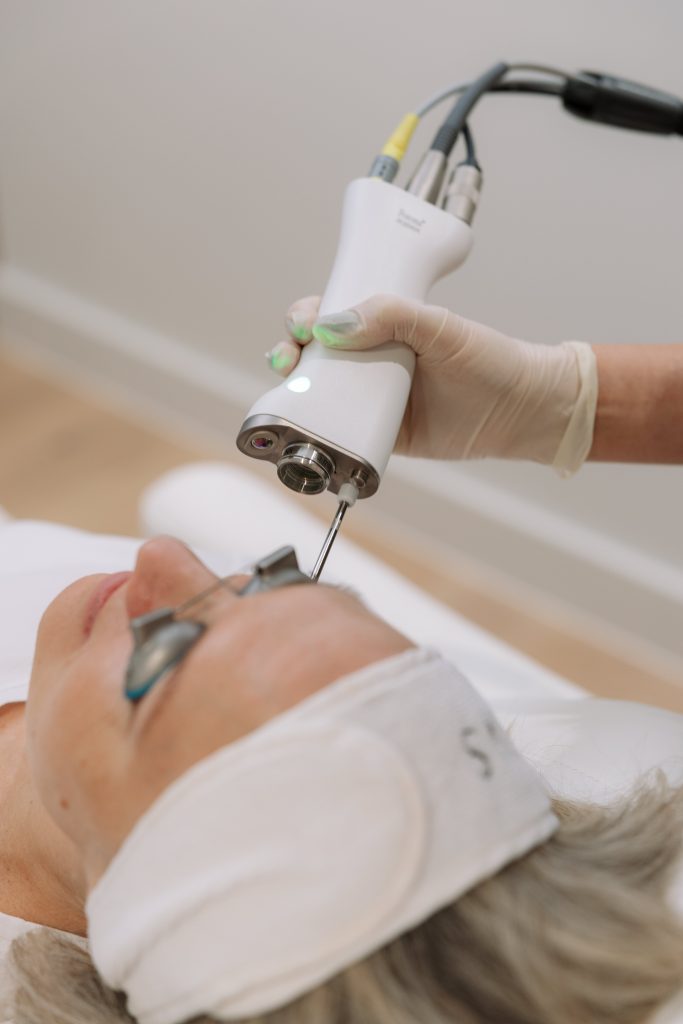
Powered by Fotona’s cutting-edge laser technology, StarWalker reaches deeper layers of the skin to target stubborn pigmentation and sun damage beyond the reach of many conventional IPL and laser treatments.

TREATMENT TIME
30-60 minutes

DISCOMFORT LEVEL
Minimal discomfort

SOCIAL DOWNTIME
Can range from no downtime, to temporary redness or visible darkening of pigmentation for approximately 2 weeks

RECOMMENDED COURSE
2-6 sessions
TREATMENT TIME
30-60 minutes
DISCOMFORT LEVEL
Minimal discomfort
SOCIAL DOWNTIME
Can range from no downtime, to temporary redness or visible darkening of pigmentation for approximately 2 weeks
RECOMMENDED COURSE
2-6 sessions
How does it work?
The Fotona StarWalker uses advanced Q-switched laser technology and multiple wavelengths to target pigmentation at different depths within the skin.
Its photoacoustic energy breaks down excess melanin into smaller particles, helping address deep-seated pigmentation and accumulated sun damage that can be difficult to treat with conventional lasers.
This makes it a particularly valuable technology for complex concerns such as melasma, which can be challenging to treat due to its deeper pigment deposits and tendency to recur. Treatment can be carefully tailored to the individual skin, with the aim of improving clarity and achieving a more even skin tone.
Key benefits
Targets deep-seated pigmentation like melasma.
Reduces visible sun spots and age spots.
Improves uneven skin tone.
Breaks down stubborn melanin deposits.
Reduces redness and visible vascular lesions.
Refines skin clarity and overall complexion.
Our Approach
At KINS, we have a unique approach to guide you on the best treatment options and protocols that work for your skin and your lifestyle. We analyse your skin in layers, we educate you on your skin type and how it will age and we put a long term plan in place for you that gives consistent results.

FAQs
What does Fotona StarWalker do?
– Targeted Treatment of Deep-Set Pigmentation: Advanced laser wavelengths penetrate deeper into the skin to target stubborn melanin deposits that may sit beyond the effective reach of IPL and other superficial light-based treatments.
– Advanced Treatment for Melasma: Its ultra-short Q-switched pulses create a photoacoustic effect, breaking down excess pigment while minimising unwanted heat. This offers a more controlled approach to melasma, a notoriously difficult condition that can be aggravated by excessive thermal stimulation.
– Effective Reduction of Sun Spots: Precisely targets excess melanin in sun spots, age spots and accumulated sun damage, helping to reduce visible discolouration and restore a more even skin tone.
Ideal candidate?
The ideal candidate for Fotona StarWalker would have:
Sun damage, sun spots, freckles or age spots.
Deep-set or stubborn pigmentation that has not responded to other treatments.
Melasma or uneven skin tone requiring a carefully tailored approach.
Good overall skin health and realistic expectations of gradual improvement.
When will I see results?
The timing of results vary depending on the type of pigmentation being treated:
Melasma: Gradual improvement may be seen after 3–4 treatments but 6 may be necessary with results developing progressively
Freckles & Pigmentation: Visible improvement can begin within 2 weeks of the first session.
Sun Spots: Dark spots typically begin to fade or clear within 2–3 weeks, although full clearance can take up to 8 weeks.
Longevity?
Results vary depending on the type of pigmentation being treated:
Melasma: Results can be long-lasting, but melasma is a recurring condition. Pigmentation may remain dormant or significantly less visible until triggered by factors such as UV exposure, hormonal changes and heat.
Freckles & Pigmentation: Results can last until further sun exposure stimulates new pigment production.
Sun Spots: Treated spots may never return, but new sun spots can develop with ongoing UV exposure.
Maintenance sessions?
Maintenance requirements depend on the type of pigmentation:
Melasma: Periodic maintenance treatments may be recommended, depending on recurrence and triggers, alongside consistent skincare and SPF.
Freckles: Maintenance may be needed if new freckles develop following sun exposure.
Sun Spots: No routine maintenance is necessarily required once cleared, although new spots may develop with further sun damage.
Regular SPF 50 and appropriate home skincare are essential to maintaining results.
Contraindications
There are certain contraindications where Fotona StarWalker should be avoided or modified. These include:
1. Active Skin Infections or Inflammation: If you have an active infection (e.g., cold sores, bacterial infections) or inflammation (e.g., eczema, psoriasis), you should avoid Fotona StarWalker as it may worsen these conditions.
2. Pregnancy/Breastfeeding: We advise avoiding Fotona StarWalker treatments during pregnancy due to the lack of conclusive safety data. Hormones are also still settling down post-partum and can have an impact on your skin.
3. Tanned or Sunburned Skin: Having a tan, sunburn, or any type of skin discoloration (even from tanning products) can increase the risk of complications, as the skin is more sensitive to laser treatments when it’s not in its normal color.
4. Use of Photosensitising Medications: Certain medications, such as those used for acne (e.g., Accutane) or some antibiotics (e.g., tetracyclines), can make your skin more sensitive to laser treatments, increasing the risk of burns or hyperpigmentation. You should avoid Fotona StarWalker if you are taking these types of medications or consult your doctor for specific guidance.
5. History of/active skin Cancer or other Cancer: If you have active skin cancer or a history of it, particularly in the areas being treated, eligibility for Fotona StarWalker will be discussed in clinic.
6.Endocrine disorders (uncontrolled Diabetes): Individuals with uncontrolled diabetes may have slower healing responses, which can make them more susceptible to side effects such as burns or scarring from Fotona StarWalker treatments.
7. Autoimmune Disorders or Photosensitivity Disorders: Conditions like lupus or other autoimmune disorders may make your skin more sensitive to laser, which can increase the risk of adverse effects from Fotona StarWalker treatments.
8. Recent Chemical Peels or Laser Treatments: If you have recently undergone chemical peels or other laser treatments, your skin may be too sensitive for Fotona StarWalker. It’s advisable to wait a few weeks (as recommended by your provider) before undergoing Fotona StarWalker after such treatments.
9.Heart Disease or Pacemaker: In rare cases, people with heart conditions or a pacemaker may need to avoid Fotona StarWalker treatments, eligibility and options can be discussed in clinic.
10. Disease stimulated by light: this would include solar urticaria or photosensitive epilepsy. Fotona StarWalker can trigger these conditions. It is our aim to ensure every treatment is carried out safely and adverse reactions are avoided.
11. Connective tissue disorders: People with connective tissue disorders often have skin that is more fragile, thinner, or more prone to injury. The heat generated by Fotona StarWalker could potentially cause burns, irritation, poor healing, or other adverse effects on these sensitive skin types. The heat from the Fotona StarWalker can also trigger the skin’s healing response, leading to further collagen production, which may contribute to the formation or enlargement of keloid scars.
A consultation will be performed prior to any procedures ensuring all treatments are carried out safely.
If you have any concerns regarding your eligibility for a treatment, you can get in touch or come in for a consultation and we can go through the best treatment options for you.
Other Treatments
Effective treatment combinations that enhance your results


